
Farmland Investing: The Institutional Investment Case
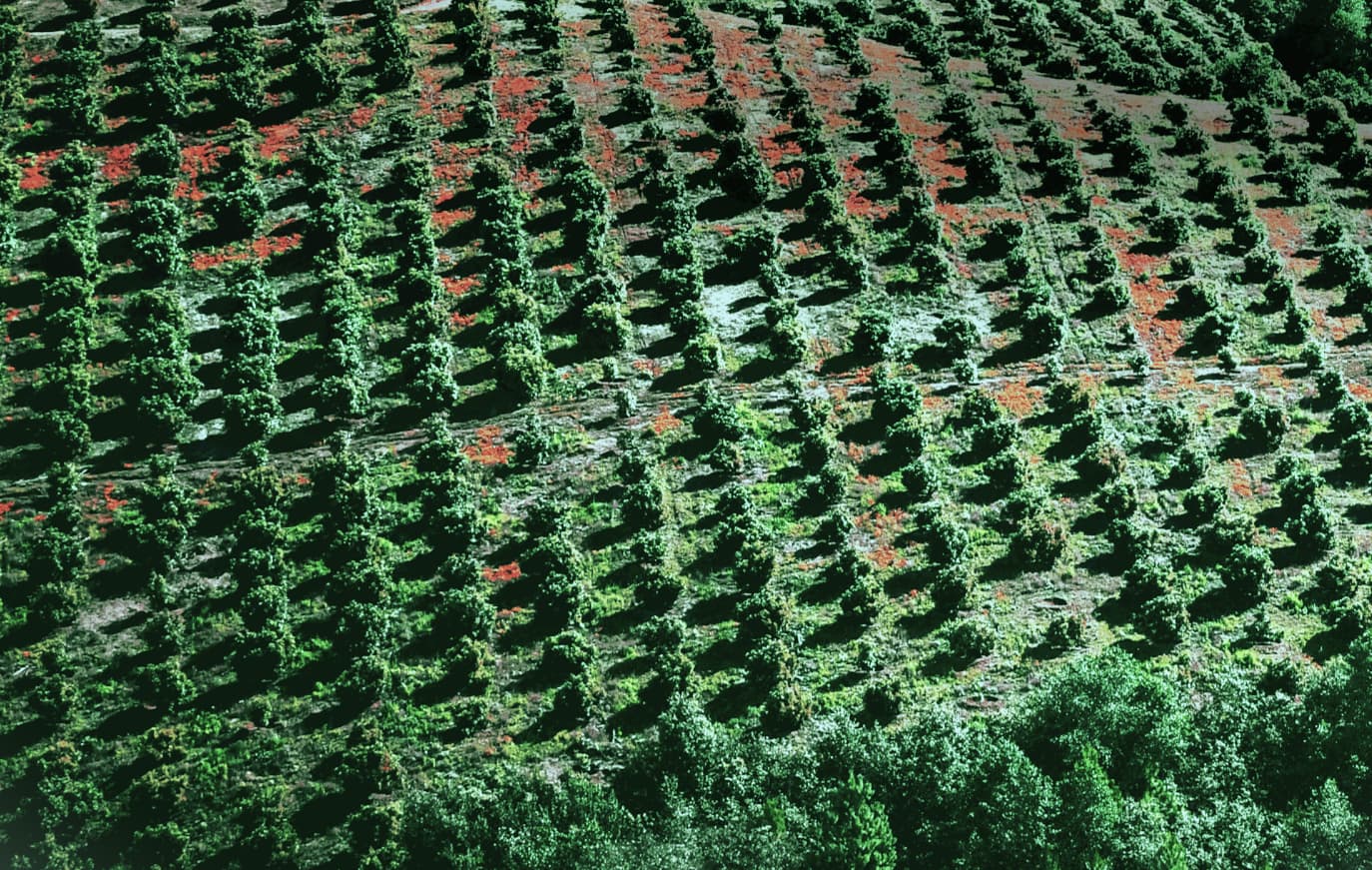
Over the past two decades, some of the world's most conservative investors, pension funds, university endowments, insurance companies, have quietly built positions in an asset most people never think of as an investment at all: farmland. Forty years ago, institutional ownership of US farmland was effectively zero. Today, institutions hold an estimated $26 billion of it, and the direction of travel is clearly upward. The question worth asking is why sophisticated, long horizon capital keeps arriving at the same unglamorous place.
The Demand Story Underneath The Asset
Farmland's case rests on one of the most durable trends there is. The world's population is expected to reach around 9 billion by 2050, and as incomes rise across emerging markets, diets are becoming richer and more calorie intensive. More people eating more food means steadily rising demand for what farmland produces. At the same time, the supply of productive land is fixed and, in per capita terms, shrinking, you can't manufacture more arable acres. Demand that grinds higher against supply that can't expand is exactly the setup long term investors look for. It also helps that the demand is non negotiable: people have to eat in a recession as much as in a boom.
The Return Profile Institutions Want
Here the record is best told through the industry's own benchmark. The NCREIF Farmland Index has averaged annual total returns of roughly 9.8% to 10.2% since its 1991 inception, tracking properties acquired by pension funds and other tax exempt investors. Annualized volatility has run around 6.8%, versus roughly 17.6% for US stocks and 18.8% for public REITs, a materially smoother ride for a similar or better long run return.
Crucially, that return has come with a low correlation to public markets. In several periods when equities fell sharply, the dot com crash and the 2008 financial crisis among them, farmland values held up or continued to rise, reinforcing its reputation as a genuine diversifier rather than just another growth asset riding the same cycle.
Managers who specialize in the space point to three reasons institutions allocate: farmland's history as an inflation hedge, its low correlation to stocks and bonds, and its attractive risk adjusted returns with low volatility. For a pension fund matching assets against liabilities that stretch decades ahead, an asset that produces income, keeps pace with inflation, and doesn't move in lockstep with public markets is close to ideal.
Worth stating plainly: 2024 broke the streak. For the first time since the index's 1991 inception, the NCREIF Farmland Index posted a negative annual total return of roughly 1.0%, driven by a pullback in permanent cropland (notably almonds) amid soft commodity pricing and oversupply. Income returns stayed positive throughout, it was the appreciation component that turned negative. It's a useful data point for calibrating expectations: farmland is low volatility relative to other assets, not volatility free.
Further reading: Farmland as a strategic asset and Asset Class Performance.
Still An Early Market
Despite the growth, farmland remains one of the least institutionalized real asset markets in existence. Institutional ownership sits under 1% of US farmland by acreage, compared with 10 to 20% institutional ownership across other commercial real estate types, even though the US farmland market is more than twice the size of those other real estate classes combined. A separate estimate from Farmland LP's founder puts institutional ownership at roughly 2% of the market by value, a figure worth treating as an industry estimate rather than an audited number.
That gap matters. A lightly institutionalized market is often a less efficient one, where land can be priced on emotion or local relationships rather than productivity, which creates room for disciplined, analytical buyers. There's also a structural tailwind: the US farming population is aging, and farmers over 65 already own well over a trillion dollars of farmland, setting up a generational transfer of land over the coming decade.
How Institutions Actually Get Exposure
Access has historically been the real bottleneck, not appetite. Institutions typically use one of a few structures, each with different tradeoffs:
- Direct ownership / separately managed accounts: the most control and the closest link between underwriting and outcome, but capital intensive, illiquid, and dependent on in house or third party operating expertise.
- Private farmland funds and private equity vehicles: pooled capital deployed by specialist managers, typically with seven to ten plus year lockups; over $25 billion has been raised by farmland focused private funds globally since 2007. Minimums for institutional share classes commonly start in the six or seven figures.
- Publicly traded farmland REITs (e.g., Farmland Partners, Gladstone Land): the only route offering public market liquidity, but as listed equities they carry more day to day price volatility than the underlying land itself and represent a much smaller slice of the institutional farmland universe.
The common thread: none of these are turnkey. Sourcing off market deals, underwriting water rights and soil quality, and structuring leases all require specialized operating relationships, which is a large part of why farmland stayed under owned by institutions for so long even as the return case was well understood.
What Institutional Quality Access Actually Requires
None of this makes farmland easy to own well. It's an operating asset, not a passive one, returns depend on crop selection, water access, soil quality, leasing structure, and the skill of whoever manages the land. Deals are frequently off market and smaller than institutions are used to underwriting, which is part of why the asset stayed overlooked for so long.
Permanent crops such as tree nuts, citrus, and avocados have historically produced higher returns than row crops in strong years, but they take years to reach full maturity, carry more commodity specific risk, and demand real operational expertise, a fact 2024's permanent cropland led downturn underscored. The edge in this asset class comes from operating capability as much as from the land itself.
The Bottom Line
For institutions, the logic is coherent: a real asset backed by essential, growing demand, with a long record of steady, inflation resistant returns and low correlation to everything else in the portfolio, available in a market still in the early stages of institutional adoption, and increasingly accessible through a widening set of fund structures. It won't suit capital that needs liquidity or quick results, and 2024 was a reminder that even farmland has down years. But for investors who can think in decades, tolerate illiquidity, and partner with the right operators, farmland offers something increasingly rare: durable returns anchored to something the world will always need.
Disclaimer: This article is provided for general informational purposes only and does not constitute investment, legal, or tax advice. Alternative investments involve significant risks, including illiquidity, and are not suitable for all investors. Past performance, including index level returns cited above, is not indicative of future results. Please speak with our team to discuss whether a strategy involving farmland or other real assets is appropriate for your circumstances.